Short answer: A hurricane-resistant house in the Dominican Republic is built in reinforced concrete and block, designed for both wind and earthquakes, with a roof that is anchored and properly waterproofed, impact-rated or protected openings, and materials chosen for salt air and humidity: stainless or coated metal, marine-grade finishes and good ventilation. Most damage we repair comes from water and corrosion, not from the structure failing.
Key takeaways
- The north coast has two structural risks: hurricanes (season June 1–November 30) and earthquakes. The structure must be designed for both.
- Water is the everyday enemy. Roof waterproofing, slopes and drainage matter more than any finish.
- Salt air corrodes metal fast near the beach. Hardware, railings, fixings and AC units need the right materials.
- Openings are the weak point in a storm. Impact-rated windows or shutters protect the inside of the house.
- Ventilation and shade reduce humidity, mould and energy costs.
We have seen what the climate does to houses here: rusted railings after a few years, roofs that leak at every heavy rain, doors that swell and stop closing. Almost all of it is avoidable at the design stage. This is what we look at.
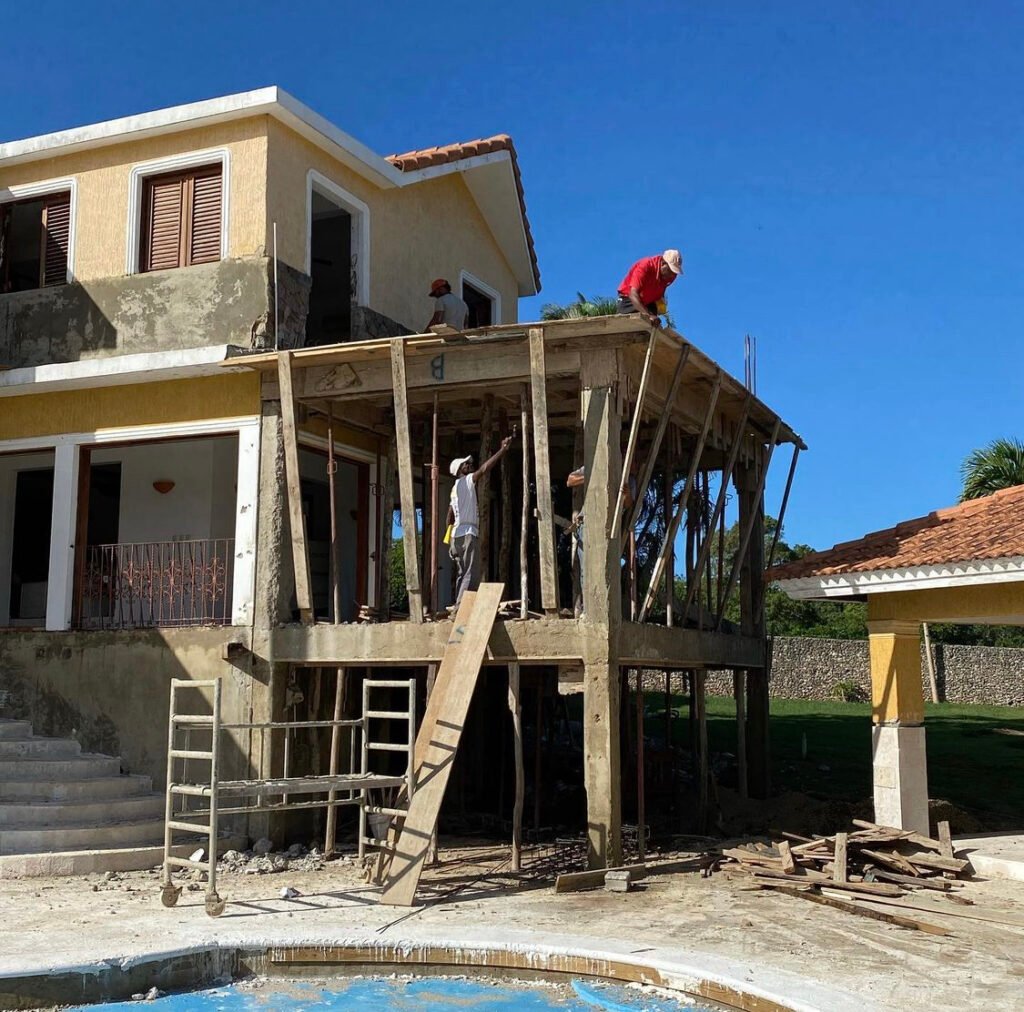
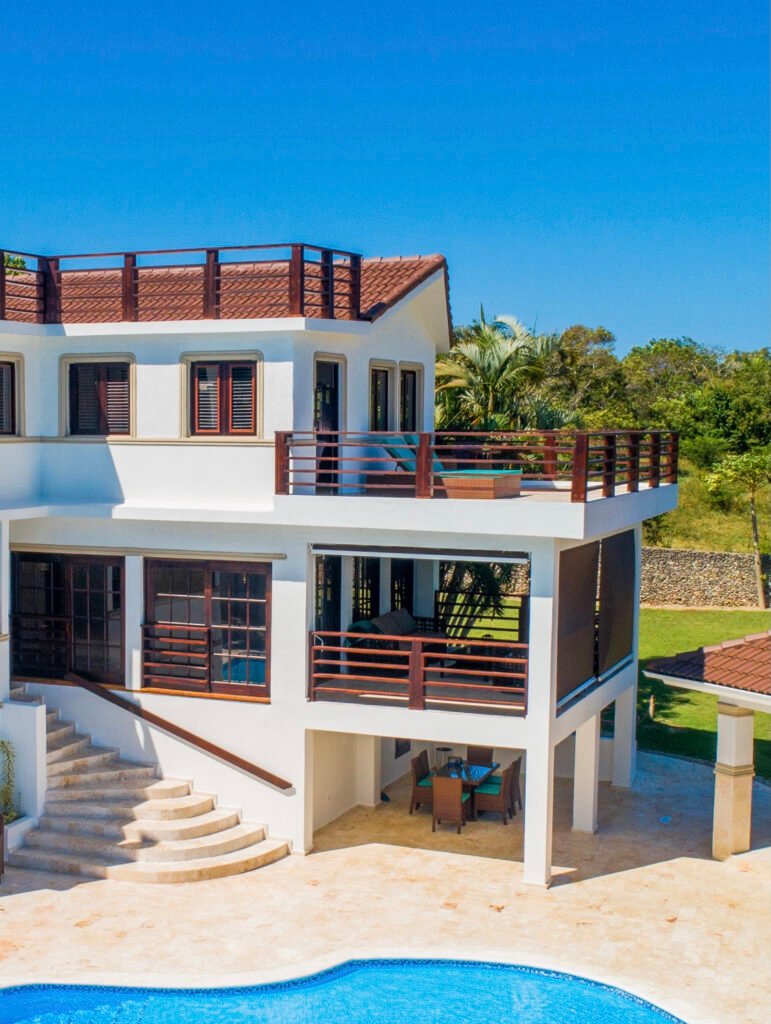
What are the climate risks for a house on the north coast?
| Risk | What it does to a house | Where it hits |
|---|---|---|
| Hurricanes and tropical storms | Wind pressure on roofs and openings, flying debris, driving rain | Roof, windows, doors, terraces |
| Earthquakes | Lateral forces on the structure | Columns, beams, connections |
| Salt air | Corrosion of steel and metal fittings | Railings, hardware, AC, exposed steel |
| Humidity | Mould, swelling wood, peeling paint | Interiors, closets, carpentry |
| Heavy rain | Leaks, flooding, erosion | Roofs, terraces, foundations, lots |
| Sun and UV | Faded and cracked finishes, heat | Paint, sealants, roofs |
The Atlantic hurricane season runs from June 1 to November 30 (NOAA National Hurricane Center). The north of the Dominican Republic is also an active seismic area In 2003, an earthquake of magnitude 6.4 struck near Puerto Plata, and the country has a seismic design regulation (R-001) that structures must follow.. A good design handles both: a structure that resists sideways forces from wind and from the ground.
What structure makes a house hurricane resistant in the Dominican Republic?
Most homes on the north coast are built with reinforced concrete (columns, beams, slabs) and concrete block walls with steel and grout in the cells. It is the system local crews know best, materials are available, and it performs well against wind, fire, termites and humidity when it is designed and built correctly.
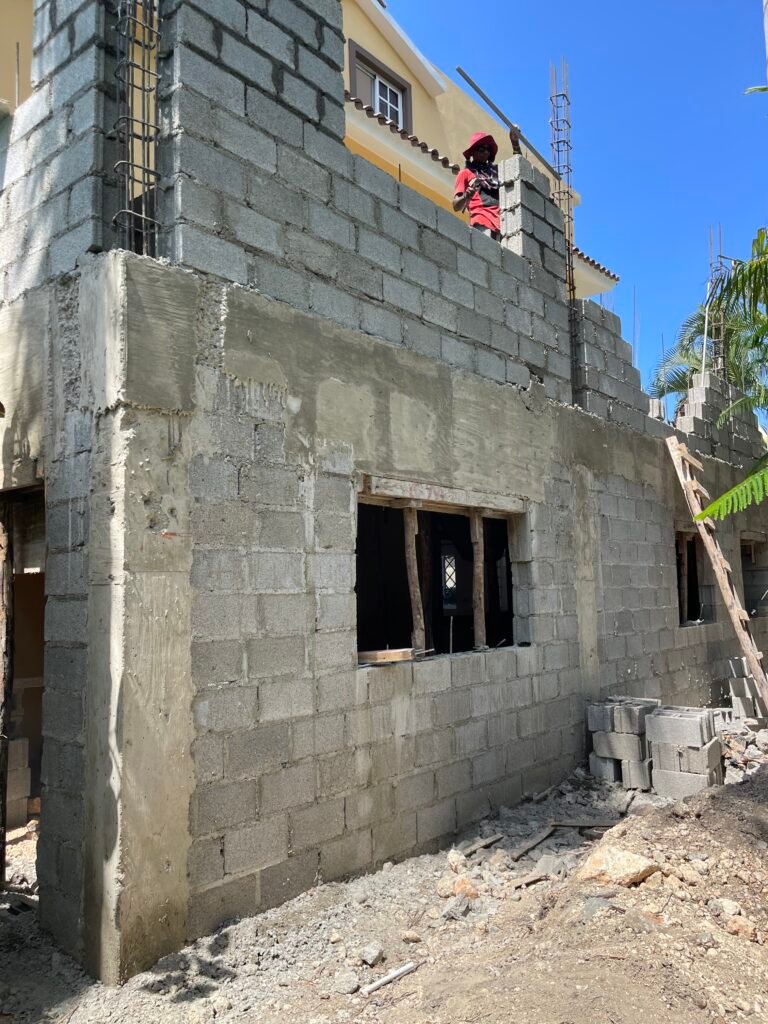
What matters more than the system is the execution:
- steel of the right size and in the right place, with enough concrete cover so salt air does not reach it;
- columns and beams tied together, so the house works as one piece in a storm or an earthquake;
- cells with steel filled with grout, not left empty.
Light steel frame and timber are also used, mostly for second floors, pergolas and interior walls. They need more protection from corrosion and termites. Our homes are built with concrete block walls and concrete slab roofs with waterproofing.
How do you protect a roof from hurricanes and leaks?
The roof is where a storm and the daily rain do the most damage.
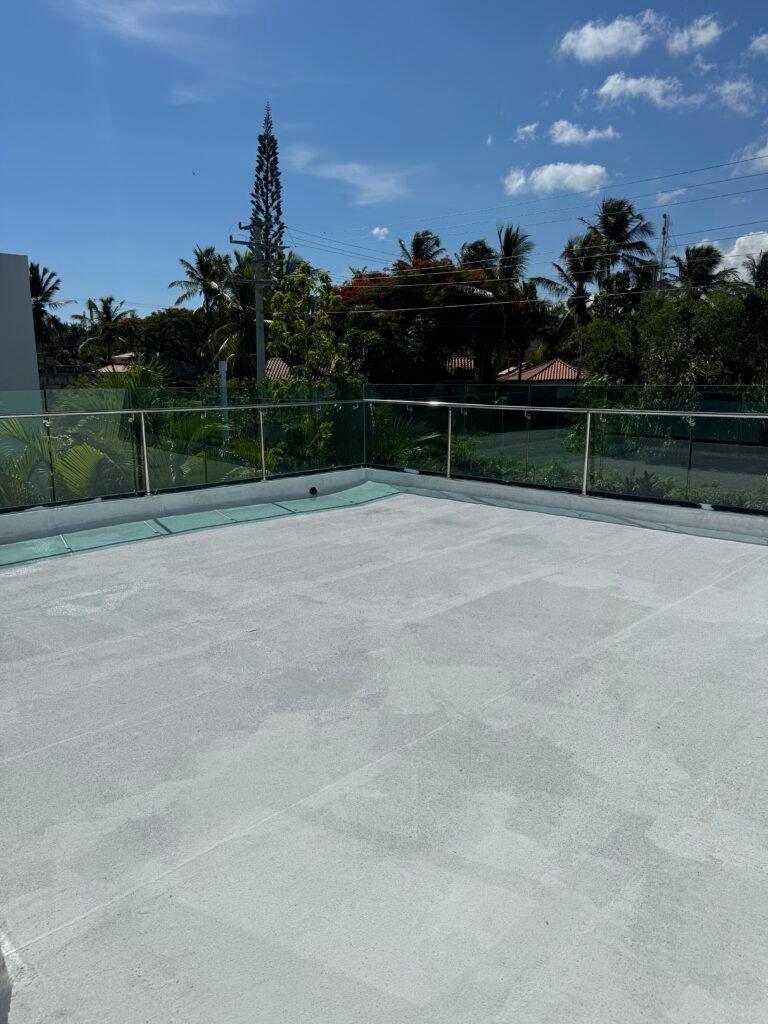
Concrete slab roofs (flat or terrace roofs) are common here. They resist wind well but must be waterproofed and sloped so water never stands on them.
Pitched roofs with wood structure and tiles or metal look great and shed water fast. In a hurricane, the key is the connection: rafters and trusses must be anchored to the beams, and the covering fixed for wind.
What we check on every roof:
- Slope and drainage: where does the water go, and can the drains handle a tropical downpour?
- Waterproofing system and its maintenance cycle.
- Parapets, joints and penetrations (AC lines, vents, solar mounts): most leaks start here.
- Anchoring of wood or metal structures to the concrete.
Which windows and doors are best for hurricanes?
Openings are the weak point. If a window breaks in a storm, wind enters the house, pressure builds inside, and the roof can be lifted from below. The options:
| Option | Pros | Cons |
|---|---|---|
| Impact-rated windows and doors | Protection is always in place; no setup before a storm | Higher cost |
| Standard windows + hurricane shutters | Lower window cost | Shutters must be installed in time; someone must be there |
| Standard windows + plywood | Cheapest | Labour before every storm; not practical for owners abroad |
For owners who are not here during the season, impact-rated openings remove the need for someone to close shutters.
What materials resist salt air near the beach?
Within a few hundred metres of the sea, salt in the air corrodes metal quickly. What we recommend near the coast:
- Railings and exposed metal: stainless steel of a marine grade, aluminium, or galvanized steel with a proper coating, not plain painted steel. Marine-grade stainless steel (type 316) is the usual recommendation near the sea.
- Fixings and hardware: stainless screws, hinges and anchors. A stainless railing on plain steel screws will still rust.
- Reinforcement cover: enough concrete over the steel in columns, beams and slabs.
- AC units and outdoor equipment: coastal-protected models and a maintenance plan.
- Paint: exterior systems made for coastal climates, with a primer suited to the surface.
How do you design a house that handles humidity and heat?
- Cross-ventilation: windows on opposite sides of rooms so air moves without AC.
- High ceilings and roof overhangs to keep sun and rain off walls and windows.
- Moisture barriers in walls where needed before closing them.
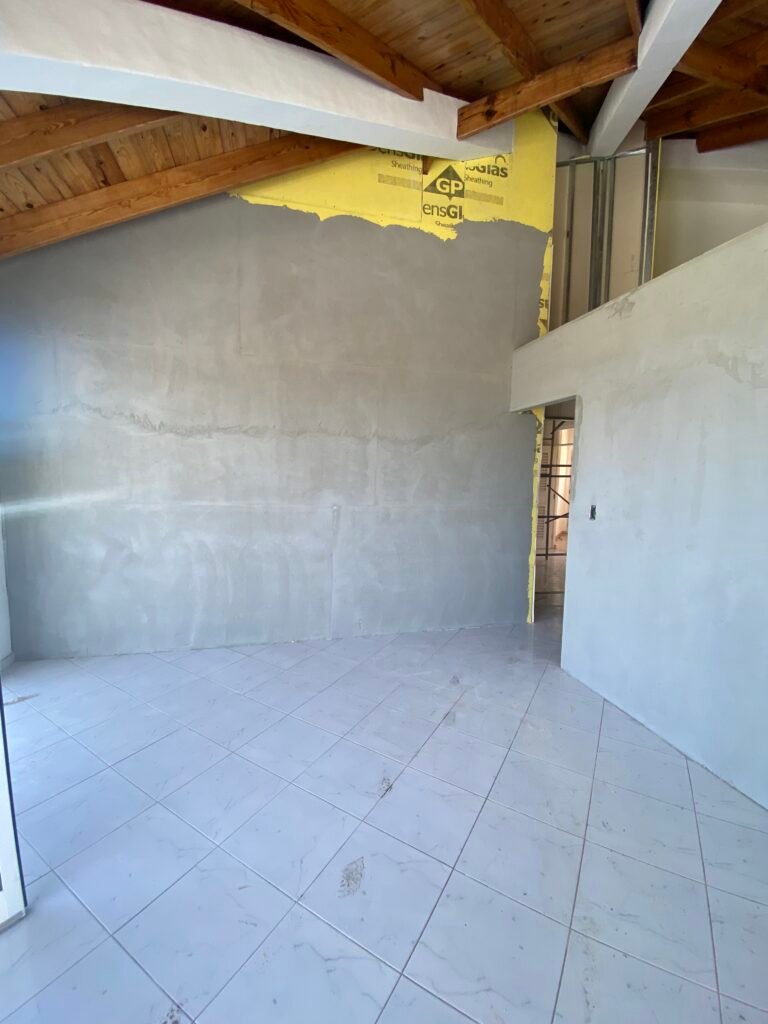
- Floors and finishes that tolerate humidity: porcelain, natural stone, treated tropical hardwood.
- Closets and storage with ventilation, so clothes and wood do not grow mould.
Checklist: is your design ready for the north coast?
| Check | Yes / No |
|---|---|
| Structure designed by a CODIA engineer for wind and seismic loads | ☐ |
| Steel cover and grouted block cells specified | ☐ |
| Roof slope, drains and waterproofing system specified | ☐ |
| Roof structure anchored to beams | ☐ |
| Impact-rated openings or a shutter plan | ☐ |
| Stainless or coated metal for railings and fixings near the sea | ☐ |
| Cross-ventilation and overhangs in the floor plan | ☐ |
| Finishes chosen for humidity | ☐ |
| Maintenance plan for roof, paint and metal | ☐ |
Build it once, build it right
Saiz Solutions Builders is a family construction company based in Encuentro, Cabarete. We build homes, villas and pools in Cabarete, Sosúa and Puerto Plata, and we repair what the climate does to houses that were not built for it.
If you are designing a new home or your current house leaks, rusts or suffers in every storm, send us photos and the location and we will tell you what we would do. Or message us on WhatsApp.
Related: home and villa construction, roofing, tile and painting and how much it costs to build a house in Cabarete.
FAQ
What is the best construction material for hurricanes in the Dominican Republic?
Reinforced concrete with concrete block walls, designed and built correctly, is the most common and reliable system on the north coast. The connections between columns, beams and roof, and the protection of openings, matter as much as the material.
When is hurricane season in the Dominican Republic?
The Atlantic hurricane season runs from June 1 to November 30.
How do I stop my roof from leaking?
Make sure the roof has enough slope, working drains, a proper waterproofing system and sealed joints around every penetration. Most leaks start at parapets, joints and AC or vent lines.
Do I need impact windows?
They are the most practical protection if you are not in the house during hurricane season. The alternative is shutters, which someone must install before each storm.
Why does everything rust so fast near the beach?
Salt in the air speeds up corrosion. Use stainless or properly coated metals, stainless fixings, enough concrete cover over steel, and plan regular maintenance.
