Short answer: To choose a contractor in the Dominican Republic, visit at least two of their finished projects, talk to past clients, confirm who the licensed engineer or architect on the project is, and compare quotes that use the same scope and finishes. Sign a written contract with a schedule, a change process and payments tied to completed milestones. Know exactly what each payment covers before you send it.
Key takeaways
- The cheapest quote is often the one that left something out. Compare scope line by line.
- See finished work in person and ask the owners how the build went, not just how it looks.
- Ask who signs the plans and who is on site every day.
- Payments should follow completed milestones, with a final amount kept until handover.
- Every change must be written down with its cost and its effect on time.
Expat forums are full of stories about builds that went wrong: contractors who disappeared after the deposit, budgets that doubled, workers who were not paid. Most of those stories have the same causes. This guide is how we would choose a builder if we were in your position.
What should you ask a contractor in the Dominican Republic before hiring them?
Use these questions in the first meeting. A good builder answers them without hesitating.
About the company
- How long have you been building in this area, and under what company name?
- Can I visit two or three finished projects and talk to the owners?
- Who is the licensed engineer or architect who signs the plans? Are they registered with CODIA?
- Who supervises the site every day?
- Do you have your own crews or do you subcontract? Which trades?
About my project
- What exactly is included in your price, and what is not?
- How long will it take, phase by phase?
- How will you report progress to me?
- Who handles the permits?
- What warranty do you give, and for how long?
About money
- What is the payment schedule?
- How do you price changes?
- What happens if materials go up during the build?
What should you look at when you visit a finished project?
A finished house always looks good in photos. On a visit, look at the things that show how it was built:
- Corners and edges: straight lines where walls meet ceilings, tiles cut cleanly around outlets and drains.
- Tile work: even joints, no hollow sound when you tap the tiles, correct slope toward shower drains.
- Water stains: on ceilings, under windows and at the base of walls. They show leaks the owner may have stopped noticing.
- Rust: on railings, hinges and screws, especially near the beach.
- Doors and windows: do they open and close easily, and do they seal?
- The roof: ask to see it. Check for standing water, cracks and how drains and AC lines go through it.
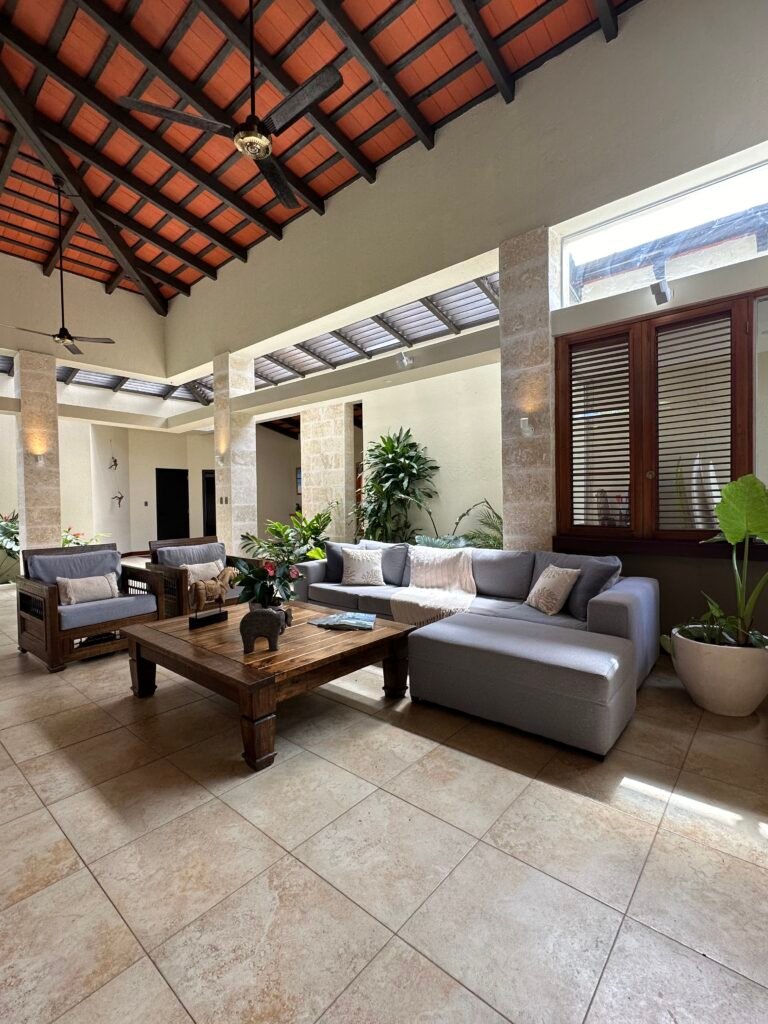
Then ask the owner the questions that photos cannot answer: Was the house finished on time? Did the price change, and why? How did the builder handle problems? Would you hire them again? The last answer tells you more than all the others.
How do you compare quotes from different builders?
Two quotes for “a 200 m² villa” can be very different houses. Before comparing totals, put them side by side:
| Item | Quote A | Quote B | Notes |
|---|---|---|---|
| Plans and engineering included? | |||
| Permits included? | |||
| Foundation type | Depends on soil and slope | ||
| Roof type and waterproofing | |||
| Windows (type, hurricane rating) | |||
| Floor and wall tile allowance per m² | |||
| Kitchen and bathrooms (allowance or specified) | |||
| Electrical and plumbing scope | |||
| Pool, terraces, walls | |||
| Septic system, cistern, pump | |||
| Landscaping | |||
| Schedule | |||
| Payment schedule | |||
| Warranty |
If one quote is much lower, look for the line that is missing or vague. For typical costs per m² on the north coast, see how much it costs to build a house in Cabarete.
What must a construction contract include?
At minimum:
- Parties and project address.
- Plans and specifications attached as part of the contract.
- Scope of work, including what is excluded.
- Price and how it can change.
- Schedule by phase.
- Payment schedule tied to milestones.
- Change orders: written, priced and approved before the work.
- Reporting: frequency and format.
- Warranty and what it covers.
- What happens if the project stops on either side.
Have a Dominican lawyer review the contract before signing, especially if you are buying the land at the same time.
How should payments be structured?
The principle is simple: your money should follow the work, not lead it.
| Stage | Payment tied to |
|---|---|
| Start | Signed contract and plans |
| Foundation | Foundation completed |
| Structure | Walls, columns, beams and slab or roof completed |
| Installations and roof | Roof closed, electrical and plumbing in place |
| Finishes | Floors, bathrooms, kitchen, paint |
| Handover | Punch list closed (final retention) |
If the price includes materials, the first payment is usually larger, because it buys them. In that case ask for the materials list, receipts and photos of what arrives on site. Whatever the structure, keep a final payment until the punch list is closed.
What are the red flags when hiring a builder?
| Red flag | Why it matters |
|---|---|
| No finished projects you can visit | You cannot check quality or reliability |
| A price much lower than others with a vague scope | Costs will appear later as “extras” |
| Large payment requested before work starts | If the project stops, your money is gone |
| No written contract, “we work on trust” | Nothing to rely on if there is a dispute |
| Nobody can tell you who signs the plans | Permit and structural risk |
| Pressure to start before the permit | Fines and stoppages |
| Changes made without your approval | Budget and design out of your control |
| Workers complain about not being paid | Cash flow problems that will reach your site |
Should you hire a builder or manage the build yourself?
Some owners hire separate crews and buy materials themselves to save money. It can work if you live here, speak Spanish, know the trades and have time to be on site every day. For most owners, especially those who live abroad, a single builder who is responsible for the whole result is safer. You have one contract, one schedule and one person to call.
Managing it yourself also means you carry the coordination risk. When the plumber is late, the tile setter waits; when the steel is short, the concrete pour moves; when a crew leaves, you find the next one. A builder absorbs those problems inside one price and one schedule. That is what you pay for, and on most villa builds it costs less than the delays it prevents.
If you live abroad, read building a house in the Dominican Republic from abroad.
Why owners choose Saiz Solutions
Saiz Solutions Builders is a family construction company based in Encuentro, Cabarete, founded by Johnny and Claudia Saiz. We build and remodel homes, villas and pools in Cabarete, Sosúa and Puerto Plata, and we supervise every project directly.
What our clients say on Google:
“Johnny pays attention to details. You will enjoy the experience of having him by your side. I love the home he built for us.” — Jonathan Kaye, home building
“All the work was spectacular. They did a lot of things in my villa, and everyone who saw it asked who had done it.” — Magdalena Medina, construction management and tile work (translated from Spanish)
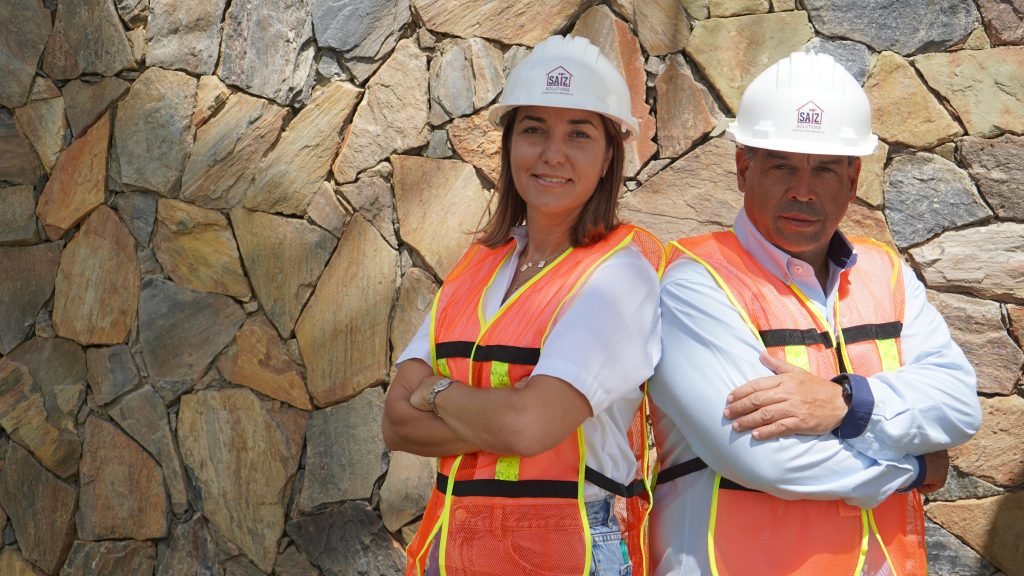
You can ask us every question on this page. Request a quote with your lot location and your project, and we will send you a written scope you can compare with any other builder. Or message us on WhatsApp.
FAQ
How do I find a reliable contractor in the Dominican Republic?
Ask for finished projects you can visit, talk to past clients, confirm who the licensed professional on the project is, and check Google reviews. Compare at least two written quotes with the same scope.
How much deposit should I pay a contractor?
It depends on what the price includes. If the builder buys all the materials, the first payment is larger because it pays for them; ask for receipts and photos of what arrives. Always keep a final amount until the punch list is closed.
Do contractors in the Dominican Republic need a licence?
Construction plans must be signed by professionals registered with CODIA, the Dominican college of engineers and architects, and the project needs a municipal construction licence. Ask your builder who signs the plans.
What should be in a construction contract?
Plans and specifications, scope and exclusions, price, schedule, payment schedule tied to milestones, a written change process, reporting and warranty.
Is it cheaper to manage the build myself?
It can be, if you live here, speak Spanish and can be on site every day. For owners who live abroad, one builder responsible for the whole result is usually safer.
