Short answer: Building a villa in Cabarete takes longer than most owners expect. On the north coast of the Dominican Republic, the construction of a mid-size villa usually takes about 8 months, plus the time for design and permits. The biggest variables are the permit process, the lot, the rainy months and how many changes the owner makes once work has started.
Key takeaways
- Plan the build in two blocks: paperwork (design, plans, permits) and site work (foundation to finishes). Delays in the first block are the most common and the least visible.
- The structure (grey work) goes fast. Finishes take longer than most owners expect.
- Every change after the plans are approved costs time, even small ones.
- On the north coast, materials for finishes are often bought in Santiago or Santo Domingo. Order them early.
- A written schedule with milestones, tied to payments, is the best way to keep a build on time.
People ask us this question in the first conversation, usually right after “how much?” Here is how a typical villa build moves, phase by phase, with what can slow each step down.
How long does it take to build a villa in Cabarete, phase by phase?
| Phase | What happens |
|---|---|
| 1. Design | Meetings, sketches, budget, final architectural design |
| 2. Construction plans | Structural, electrical and plumbing plans, signed by a licensed professional |
| 3. Permits | Municipality, environment, Ministry of Housing (MIVHED) |
| 4. Site preparation | Clearing, levelling, layout, temporary water and power |
| 5. Foundation | Excavation, steel, concrete |
| 6. Structure (grey work) | Columns, block walls, beams, slabs or roof |
| 7. Installations | Electrical, plumbing, drainage, AC preparation |
| 8. Finishes | Plaster, floors, tiles, carpentry, kitchen, bathrooms, paint |
| 9. Exterior and pool | Pool, terraces, walls, landscaping (a pool takes about 30 days, in parallel) |
| 10. Final details and handover | Punch list, cleaning, testing, keys |
| Construction (phases 4–10) | About 8 months for a mid-size villa |
The phases overlap. While the finishes start inside, the pool can be built outside. A good schedule uses those overlaps.
Phase 1–2: How long do design and plans take?
Design moves at the speed of decisions. When the owner knows what they want (number of rooms, style, budget), a design can be closed quickly. When the design changes every week, this phase can take longer than the structure.
The construction plans that go to the permit office (architectural, structural, electrical and sanitary) must be prepared and signed by professionals registered with CODIA, the Dominican college of engineers and architects.
What slows it down: changing the floor plan after the structural design is done, and not having the lot’s title and survey documents ready.
Phase 3: How long do building permits take?
The Ministry of Housing (MIVHED) reviews the plans through its single window for construction (VUC), and the municipality issues the local licence. MIVHED has said it is working to answer complete, technically correct applications within 30 days (Dominican Today, July 2026). In practice, the total time depends on the municipality, the environmental review and whether the file is complete the first time. A lot with a clean title and its own survey moves much faster. See construction permits in Puerto Plata.
For the documents you need, see our guide to construction permits in Puerto Plata.
What slows it down: missing title documents, a lot without its own survey (deslinde), and plans that come back with observations.
Phase 4–6: How long does the structure take?
Once the permit is in hand, the site moves fast. Clearing, layout and foundations come first, then columns, block walls, beams and the slab or roof.
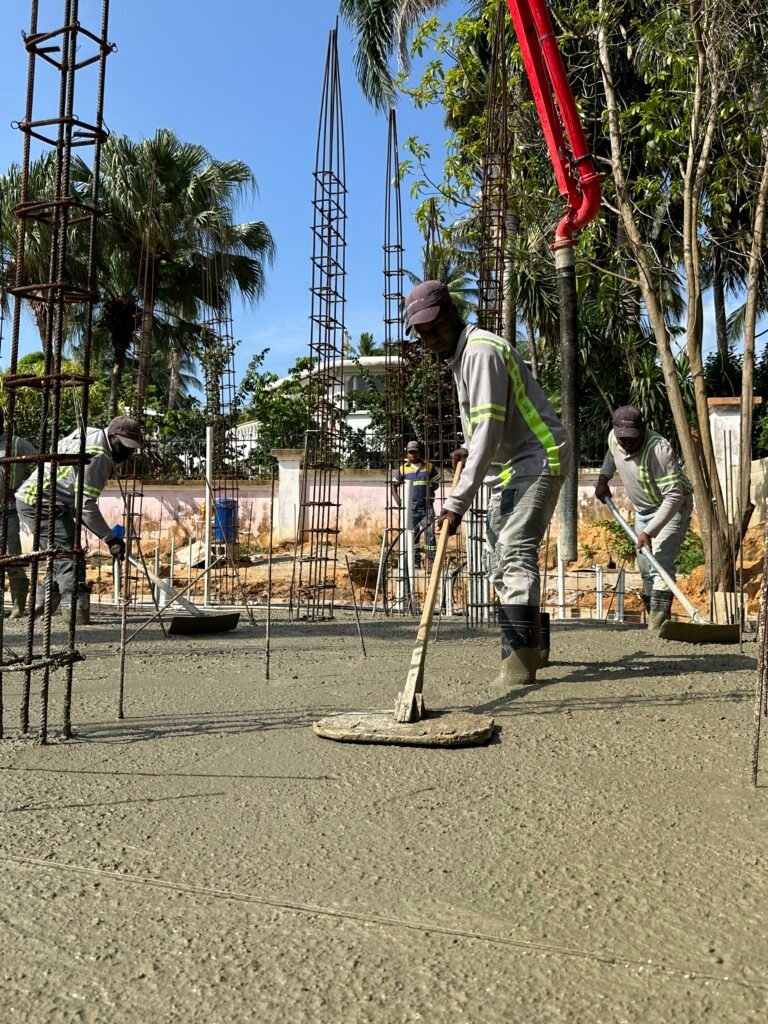
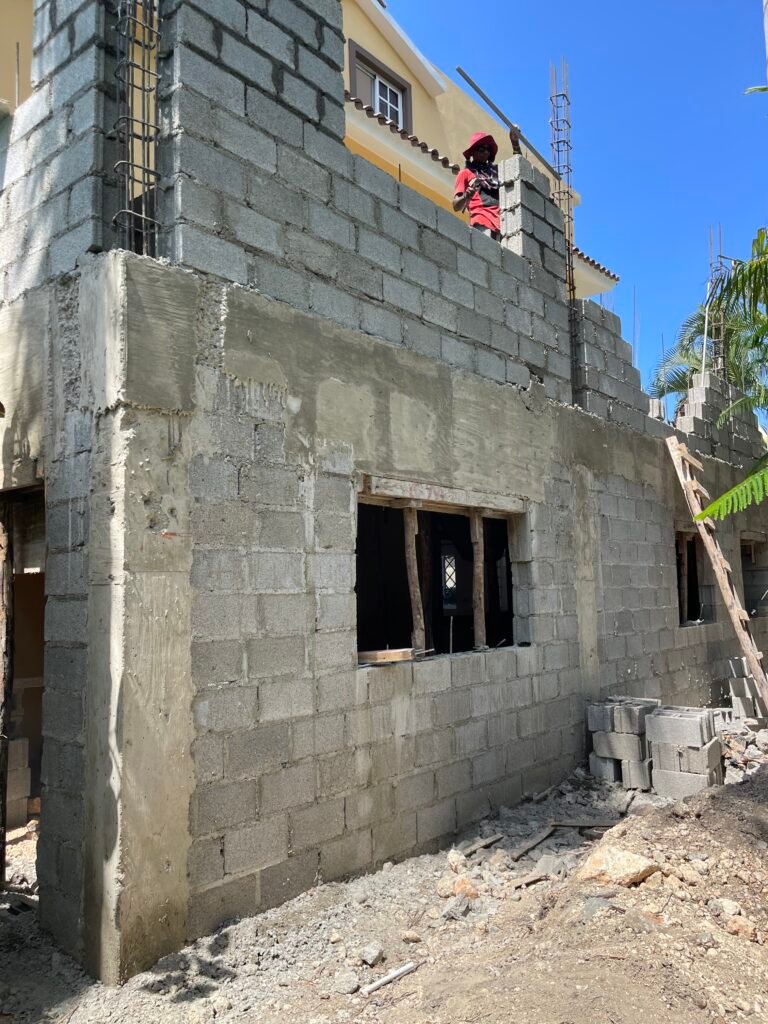
The grey work is the longest single block of the construction. A sloped lot, retaining walls or a second storey add time.
What slows it down: heavy rain during excavation and pours, concrete trucks that cannot reach the lot, and waiting for steel or block deliveries.
Phase 7–8: Why do finishes take longer than the structure?
This is the phase owners underestimate. The structure is a few big tasks repeated. Finishes are dozens of small tasks done by different trades, in the right order: electrical and plumbing inside the walls, plaster, ceilings, floors, tiles, bathrooms, kitchen, doors, windows, paint.
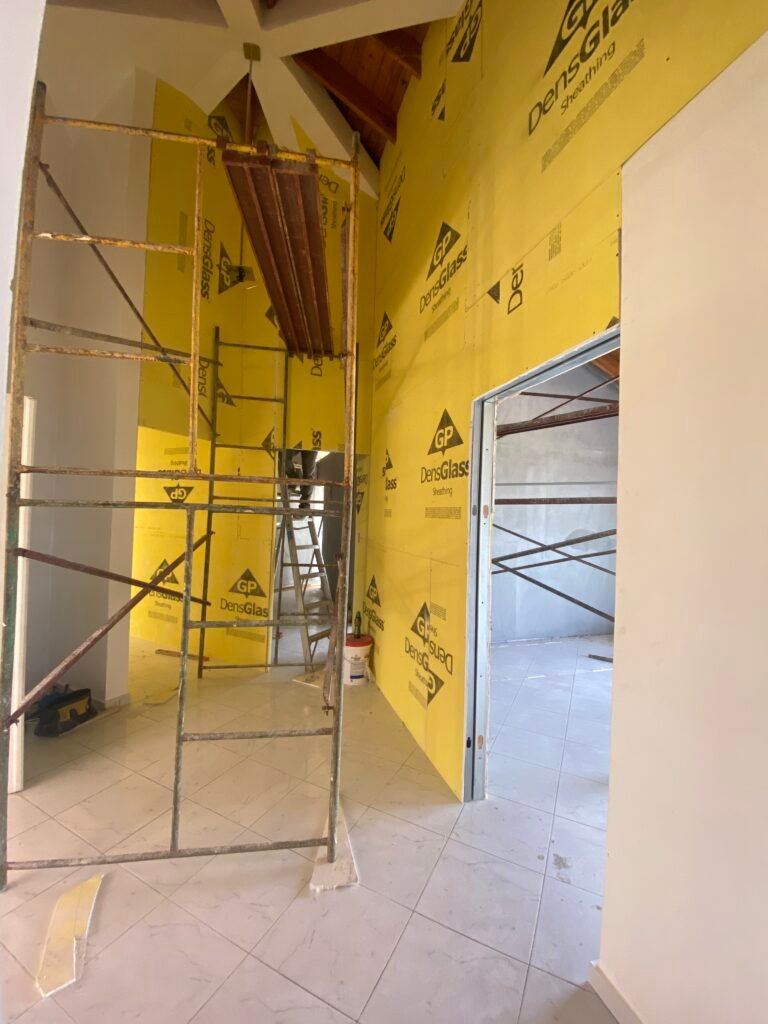
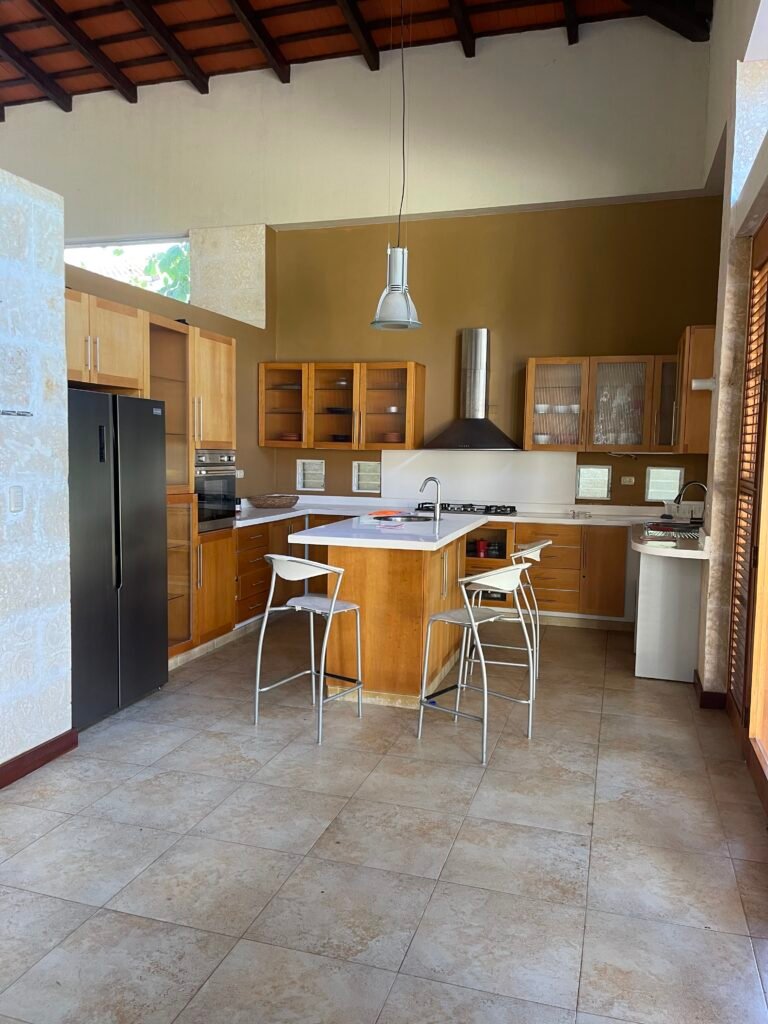
Two things decide how long finishes take:
- When the owner chooses materials. Tiles, kitchen, sanitary ware and windows chosen late arrive late.
- Where the materials come from. Many finish materials are bought in Santiago or Santo Domingo, and imported items take longer. Order early.
Phase 9: Can the pool be built at the same time?
Yes, and it usually should be. The pool, terraces and boundary walls can be built while the inside is being finished, as long as there is access and space on site. A pool usually takes about 30 days to build. See pool construction in Cabarete and Sosúa.
What delays a build on the north coast?
| Delay | Why it happens | How to avoid it |
|---|---|---|
| Permits | Incomplete file, title or survey issues | Prepare documents before the plans are finished |
| Rain | The wettest months slow excavation, pours and roofing | Schedule foundations and roof outside the wettest weeks when possible |
| Hurricane season | June 1 to November 30 in the Atlantic (NOAA) | Close the roof and openings before the peak months |
| Materials | Finishes bought late or imported | Choose and order finishes during the structure phase |
| Owner changes | Moving walls, windows or outlets after they are built | Approve plans in detail; put changes in writing with their cost and time |
| Access | Trucks and pumps cannot reach the lot | Check access before buying (our lot checklist) |
How do you keep a villa build on schedule?
- A written schedule with dates for each phase, agreed before work starts.
- Payments tied to milestones (foundation done, structure done, roof closed, finishes), not to calendar dates.
- Decisions on finishes made early. We give owners a list of what they need to choose and by when.
- Weekly updates with photos and video, especially for owners who live abroad. See building your villa from abroad.
- Changes in writing, with their effect on cost and time, before they are done.
In our projects, the three things that delay a build most are permits, rain and changes requested by the client. Every week we send owners photos and videos of the work and have a call to review progress.
Plan your build with Saiz Solutions
Saiz Solutions Builders is a family construction company based in Encuentro, Cabarete. We build homes, villas and pools in Cabarete, Sosúa and Puerto Plata, and we manage the build from plans to keys. If you want a realistic schedule for your lot, request a quote with your lot location and the size of house you have in mind, or message Johnny on WhatsApp.
For costs, read how much it costs to build a house in Cabarete. For what we build, see home and villa construction.
FAQ
How long does it take to build a house in the Dominican Republic?
For a mid-size villa on the north coast, construction takes about 8 months. Add the time for design and permits, which depends mostly on the lot documents. Larger homes, sloped lots and many owner changes add time.
Can I start building before the permit is approved?
No. Work should start once the municipal licence is issued. Starting without it risks fines and stoppages. Use the permit time to finish the plans in detail and choose finishes.
What is the slowest part of building a villa?
Usually the finishes, because many trades work in sequence and materials must arrive on time. Permits can also be slow if the documents are not complete.
Does hurricane season stop construction?
Not completely. The Atlantic hurricane season runs from June 1 to November 30. Builders plan roof work and openings to be closed before the most active weeks and secure the site when a storm is forecast.
How can I speed up my build?
Approve the plans in detail, prepare the title documents early, choose finishes during the structure phase, and avoid changes after work has started.
