Short answer: You can build a house in the Dominican Republic without living here if four things are in place: a written contract with a detailed scope and schedule, payments tied to completed milestones, weekly reports with photos and video, and someone you trust who can visit the site. Most problems with remote builds come from verbal agreements and payments that nobody can trace.
Key takeaways
- Pay for work done, not for time passed. Tie each payment to a milestone you can see in photos.
- Ask for a weekly report with photos, video and next week’s plan. Silence is the first warning sign.
- Decide finishes early. Remote owners lose the most time waiting for tiles and fixtures they have not chosen yet.
- Keep a written log of every change, with its cost and its effect on the schedule.
- Visit at the key moments: before the slab pour, before closing walls, and before handover.
Many of the people who build with us live in the United States, Canada or Europe. About 90% of our clients live outside the country. Some come twice a year. Some never see the house until the end. This is how a remote build works when it goes well, and what to watch for when it does not.
Is building a house in the Dominican Republic from abroad realistic?
Yes. Foreigners can own land and build in their own name, and much of the paperwork can be handled through a lawyer with a power of attorney. You do not need to be in the country for the permit process or the construction itself. What you need is a structure that lets you see what is happening and control when money moves.
What should the contract include?
A remote build starts with a contract you would be comfortable defending without being on site. It should include:
- Scope: the plans, the list of finishes, and what is not included (furniture, landscaping, appliances, permits).
- Price: a total price or a clear unit price, with what can change it.
- Schedule: phases with expected dates.
- Payment schedule: tied to milestones (see below).
- Change process: how changes are requested, priced and approved in writing.
- Reporting: how often you get updates and in what form.
- Warranty: what is covered and for how long. Ours is set in the contract for each project, according to the type of work.
Have your lawyer review it before signing.
How should payments work when you live abroad?
The safest structure ties every payment to a stage you can verify:
| Stage | What you should see | Proof to ask for |
|---|---|---|
| Contract signed | Signed plans, schedule, scope, payment schedule | The signed contract |
| Materials bought | What the first payment paid for | Receipts and photos of deliveries on site |
| Foundation complete | Steel before the pour and the finished foundation | Dated photos and video |
| Structure complete | Columns, walls, beams, slab or roof | Dated photos and video |
| Roof closed / installations | Roof finished, electrical and plumbing in walls | Dated photos and video |
| Finishes | Floors, bathrooms, kitchen, paint | Video walk-through |
| Handover | Punch list closed, keys | Final payment released |
Two rules we recommend to every remote owner:
- Know what every payment pays for. If it buys materials, ask for the receipts and photos of what arrives on site.
- Keep a final payment until the punch list is closed.
On payments from abroad: we accept transfers in US dollars. Our price includes materials and we buy everything the build needs, so the owner does not have to shop or pay suppliers from abroad. That is why our first payment is the largest: it buys the materials. The rest is paid during the work and at handover.
What should a weekly report include?
A useful report answers three questions: what was done, what is next, and what do you need from me?
- Photos and short videos of the work of the week, from the same angles so you can compare.
- Progress against the schedule: on time, ahead or behind, and why.
- Next week’s plan.
- Decisions needed from you, with a deadline (for example: “choose bathroom tiles by Friday so they arrive for the finishes phase”).
- Spending against the budget if the contract is cost-plus or has allowances.
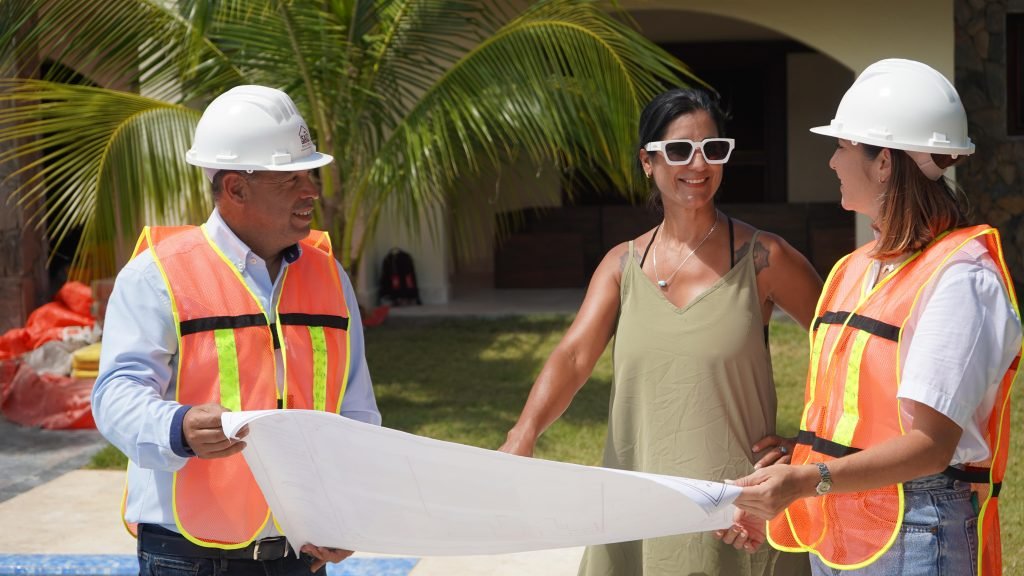
Every week we send our owners photos and videos of the work and have a call to review progress.
When should you visit the site?
If you can only come a few times, these are the moments that matter most:
- Before the first slab pour. You can still see the steel and check the layout of rooms and openings.
- Before closing walls and ceilings. Electrical outlets, switches, plumbing and AC lines are still visible. Moving an outlet now costs little; later it means breaking finished walls.
- Before final finishes are installed. Check tile samples, kitchen layout and bathroom fixtures in real light.
- At handover. Walk the house with a punch list.
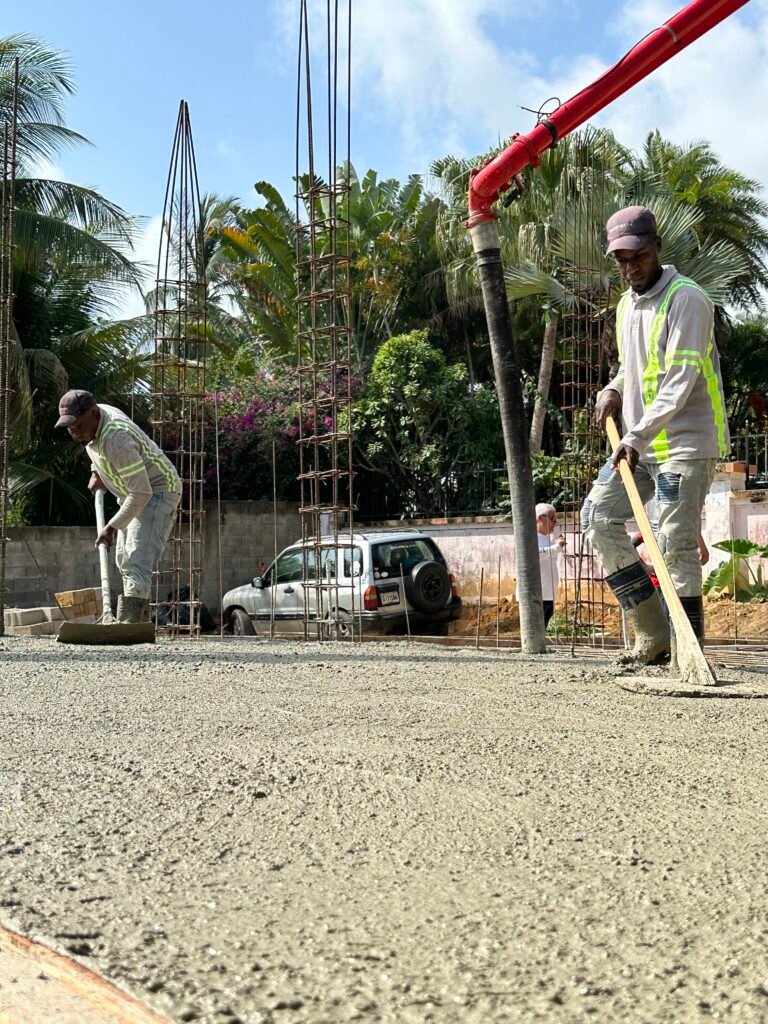
If you cannot come, ask for a video call walk-through at each of these moments. A live call shows more than edited photos.
How do you choose finishes from abroad?
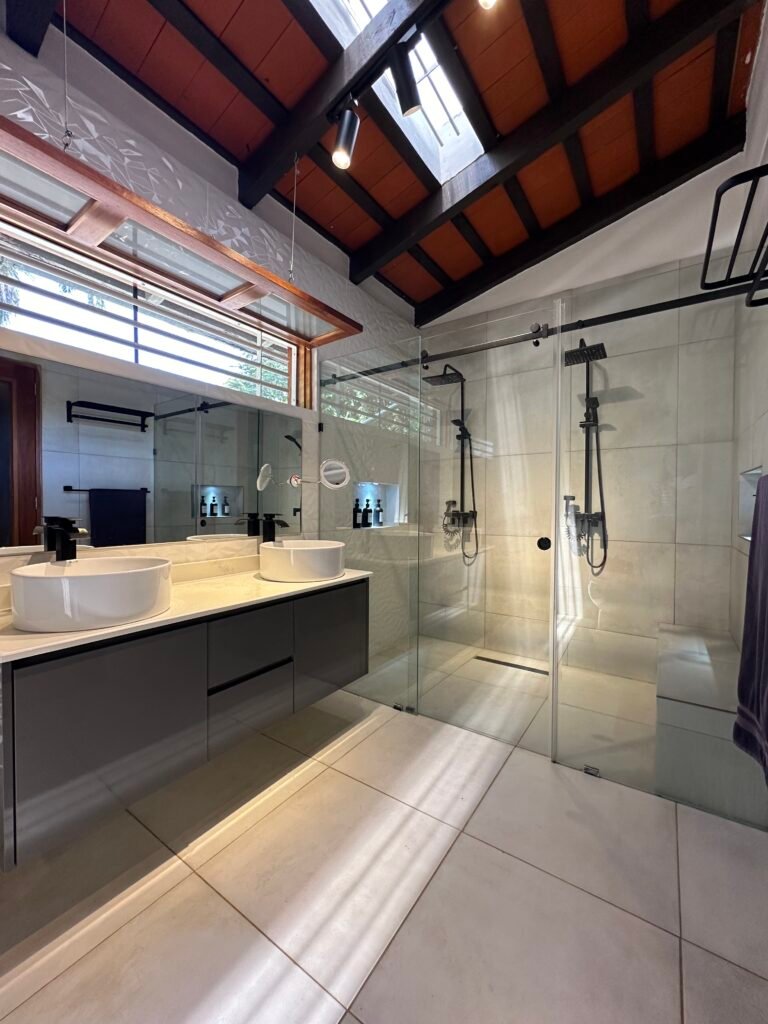
Remote owners lose the most time here. Tiles, kitchen cabinets, sanitary ware, doors and windows often come from Santiago, Santo Domingo or abroad, and need to be ordered weeks ahead.
What works:
- A finishes list with deadlines, sent at the start of the build.
- Photos and samples sent by message, with price options.
- Clear allowances in the contract (for example, a budget per m² for floor tile), so you know what changes the price.
What are the warning signs on a remote build?
| Warning sign | What it may mean | What to do |
|---|---|---|
| Reports stop or get vague | Work has slowed or stopped | Ask for a dated video of the site today |
| Requests for money ahead of the schedule | Cash flow problems | Follow the written payment schedule; ask what each payment covers |
| “We had to change it” without asking | Decisions made without you | Require written approval for every change |
| Photos always from the same angle | Something may be hidden | Ask for a full walk-through video |
| No receipts for materials in cost-plus contracts | Costs you cannot check | Require receipts with each report |
Which documents should you keep during a remote build?
Keep a shared folder (Google Drive, Dropbox or similar) with everything in one place. If something goes wrong, this is what your lawyer will ask for:
- the signed contract and the approved plans;
- the building permit and municipal licence;
- every payment receipt, with the milestone it paid for;
- every weekly report with its photos and videos;
- every change order, signed, with its cost and time;
- invoices for materials and equipment with warranties (pumps, AC, windows, waterproofing);
- the final punch list and the handover document.
A builder who works well has no problem keeping this folder up to date with you. It also makes selling or renting the house easier later, because you can show exactly how it was built.
Do you need someone local on your side?
It helps. Options include a friend or neighbour who can visit, your real estate agent, an independent architect or engineer who inspects at key milestones, or your lawyer for the paperwork. The builder reports to you; a third party gives you a second pair of eyes.
How Saiz Solutions manages builds for owners abroad
Saiz Solutions Builders is a family construction company based in Encuentro, Cabarete. Johnny and Claudia Saiz supervise every project directly, and a large part of our clients live outside the Dominican Republic. About 90% of our clients live abroad. Every week they get photos, videos and a call. Our price includes materials, we buy everything the build needs, and we accept payments in US dollars from abroad.
If you are planning a build from abroad, send us your lot location and what you want to build and we will explain how we would run it, step by step. Or message us on WhatsApp.
Related reading: how to build a house in the Dominican Republic as a foreigner, how long a villa build takes and how to choose a contractor.
FAQ
Can I build a house in the Dominican Republic while living in another country?
Yes. With a lawyer holding a power of attorney for the paperwork, a clear contract, milestone payments and weekly reports, you can build without being on site full time.
How do I know the work is really being done?
Ask for dated photos and videos every week, from consistent angles, and a live video walk-through at key milestones. Ask for receipts for the materials your payments buy.
How often should I visit during construction?
Ideally before the first slab pour, before walls and ceilings are closed, before finishes are installed, and at handover. If you cannot travel, do a live video call at each of these moments.
What is the biggest risk of building from abroad?
Paying ahead of the work and agreeing to changes verbally. Tie every payment to a completed milestone and put every change in writing with its cost and time.
Should I hire an independent inspector?
It is a good idea for a large build. An independent engineer or architect can check the structure and installations at key milestones and report to you directly.
